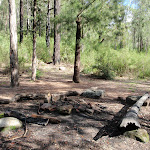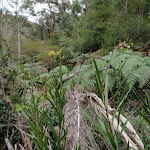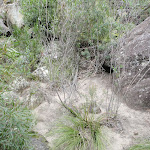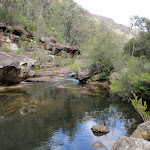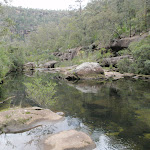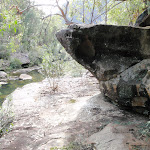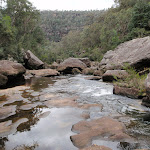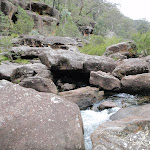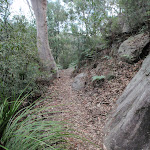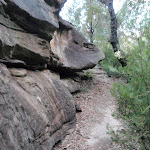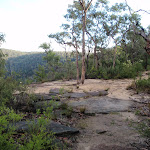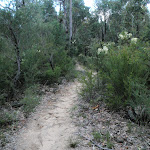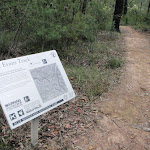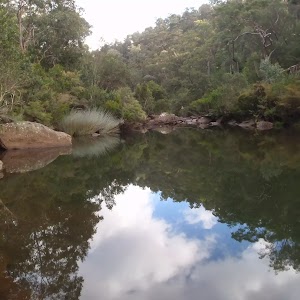
This fairly short overnight walk is a great way to explore Erskine Creek. The walking along Erskine creek is mostly off track, and is through thick scrub in places. Although this walk could be done in a day, an overnight walk gives more time to explore the creek and enjoy the caves in the area.
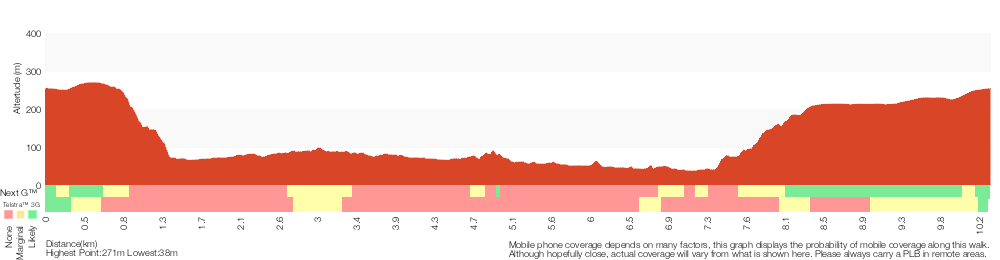
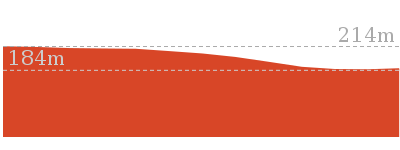
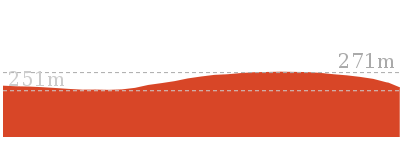
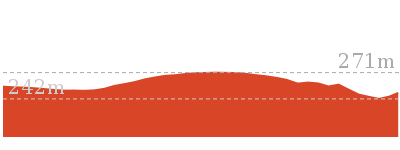
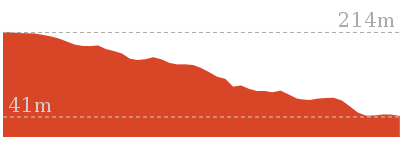
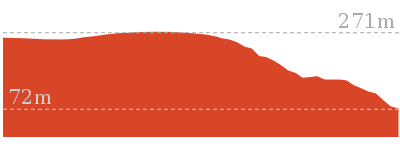
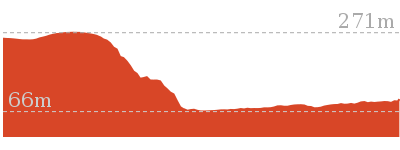
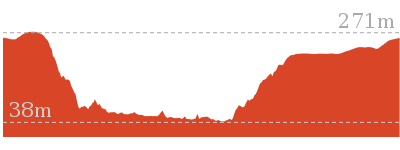
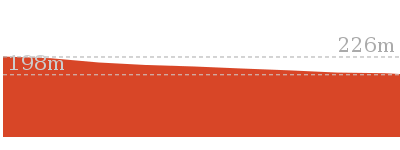
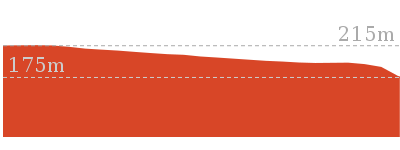
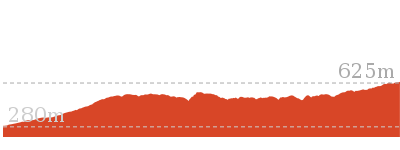
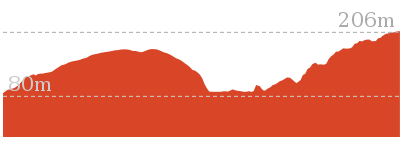
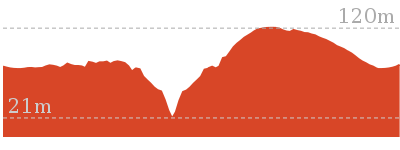
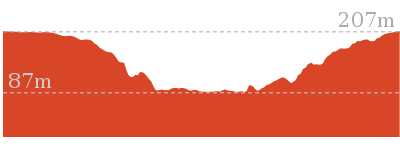
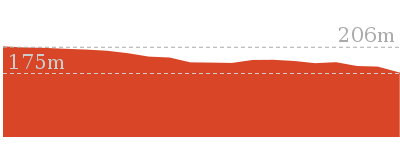
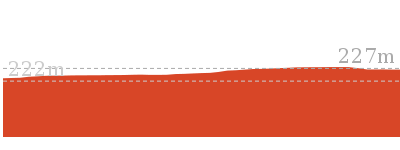
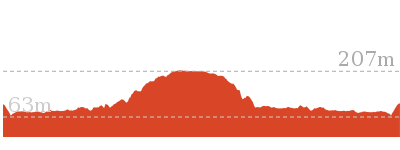
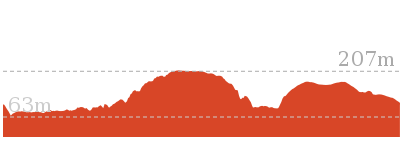
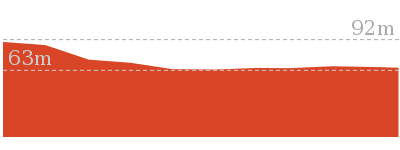
Cross sectional view of the Dadder Cave and Jack Evans track bushwalking track

Analysis and summary of the altitude variation on the Dadder Cave and Jack Evans track bushwalking track
Overview of this walks Grading - Based on the AS 2156.1 - 2001
These details are new. This new feature still requires more testing and refining. Please use the 'Walker Feedback' for report specific issues. Please e-mail Matt if you have any general comments. Hope you find it helpful.
Under this standard, a walk is graded based on the most difficult section of the walk.
Length
10km
Time
2 Days
.
Grade 6/6
Route: Unmanaged
AS 2156.1
Gradient
Very steep and difficult scrambles (5/6)
Quality of track
Off track (no visible track at times) (6/6)
Signs
No directional signs (5/6)
Experience Required
Very high level of bushwalking experience recommended (6/6)
Weather
Forecast, unforecast storms and severe weather may impact on navigation and safety (4/6)
Infrastructure
No facilities provided (5/6)
*This summary of grading information is new and still in testing
Some more detail of this walks Grading
Here is a bit more details explaining the grading looking at sections of the walk. Gradient
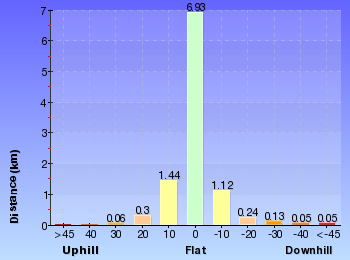
3.7km of this walk is very steep with difficult rock scrambles and another 3.1km is very steep. Whilst another 2.7km has gentle hills with occasional steps and the remaining 790m has short steep hills.
Quality of track
5km of this walk follows a known route where there is no visible track and another 2.4km follows a smooth and hardened path. Whilst another 1.4km follows a formed track, with some branches and other obstacles and a 760m section follows a clear and well formed track or trail. The remaining 410m follows a rough track, where fallen trees and other obstacles are likely.
Signs
7km of this walk Has no directional signs and another 1.8km is clearly signposted. Whilst another 1.1km has directional signs at most intersection and the remaining 850m has minimal directional signs.
Experience Required
5km of this walk requires a leader with a high level of bushwalking experience and another 2.6km requires no previous bushwalking experience. Whilst another 1.1km requires some bushwalking experience and a 720m section requires a leader a with moderate level of bushwalking experience. The remaining 610m requires at least one leader with a very high level of bushwalking experience.
Weather
5km of this walk is affected by forecast, unforecast storms and severe weather events that may impact on navigation and safety and another 3.8km is not usually affected by severe weather events (that would unexpectedly impact safety and navigation). The remaining (1.1km) is affected by storms that may impact your navigation and safety.
Infrastructure
6km of this walk has no facilities provided and another 1.8km is close to useful facilities (such as fenced cliffs and seats). Whilst another 1.7km has limited facilities (such as not all cliffs fenced) and the remaining 420m has limited facilities (such as cliffs not fenced, significant creeks not bridged).
The State Goverment is allowing Recreational Hunting in our National Parks This poses a serious threat to the environement and visitor safety Help stop the madness by writing a quick letter. Thanks for your help
Drive to Pisgah Rock track head
A park entry fee is required for driving into the park. You can drive or ride to the start of this walk Use these links to plan your trip to the start of this walk. Plan your trip from --> Sorry there are no driving directions, but you can see the start of this walk on this map
(0 km)
Pisgah Rock track head
to
Pisgah Rock Intersection Track: Moderate - bushtrack
Length = 755 m
Time = 14 mins
Climb = 21 m
Descent = -17 m
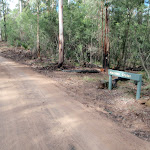
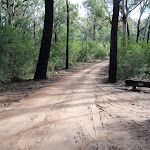
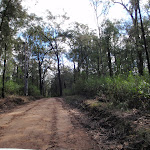
From the Pisgah Rock car park (2.2km further along Nepean Lookout Fire Trail from the Oaks Picnic Area), this walk follows the 'Pisgah Rock 700mt' sign along the old management trail. The track meanders through the Eucalypt and Casuarina forest as it climbs a gentle hill and then heads down the other side. The track soon comes to an intersection with a small bush track off to the left, from the intersection there are glimpses of the valley views.
(0.76 km)
Pisgah Rock Intersection
to
Attic Cave Optional sidetrip: Route: Hard - bushtrack
Length = 248 m
Time = 6 mins
Climb = 13 m
Descent = -23 m
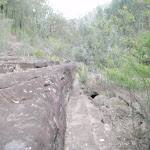
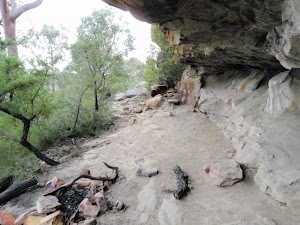
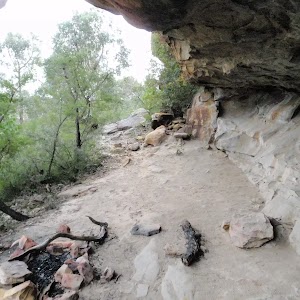
Turn right: From the intersection, the walk follows the old management trail that very soon narrows into a bush track as it heads away from the view (keeping the valley to the left). The tracks then emerges from the bush to cut across a rock shelf and into the scrub again. Once in the gully the track turns left to climb down the 'V' in the rock. At the bottom of the climb the walk heads right under the now obvious sandstone cave. The walk continues following the base of this cliff line along a fairly clear track passing several interesting sandstone overhangs. Soon the track comes to a large overhang and fire circle at Attic camping cave. (Retrace your steps back to the main track, then veer right to continue along this walk.)
Attic Cave
Alt = 249 m
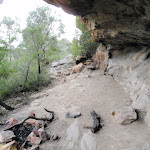
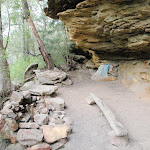
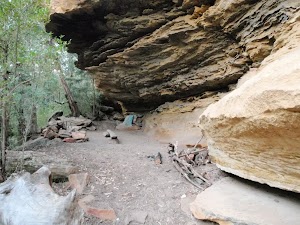
Attic Cave, near Pisgah Rock in the lower blue mountains is a large sandstone overhang. The cave has been used by walkers as an overnight camp for many decades. The cave could comfortably sleep about 5 people. There is a log book in a tin cake box on the rock shelf, making for some interesting reading, and awaiting your story. There is a fire circle, and the cave is reasonably well protected from the weather. The name Attic Cave is said to have come from the hole, a shelf, in the top of the cave, forming an attic.
(0.76 km)
Pisgah Rock Intersection
to
Pisgah Rock Track: Moderate - bushtrack
Length = 22 m
Time = 1 mins
Climb = 0 m
Descent = -5 m
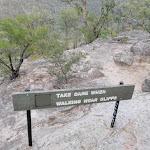
Veer left: From the intersection this walk takes the short bush track toward the view of the valley. The track comes to the unfenced cliff and great view from the top of Pisgah Rock and a sign posted 'take care when walking near cliffs'.
Pisgah Rock
Alt = 253 m
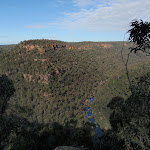
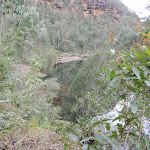
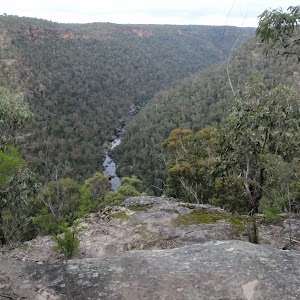
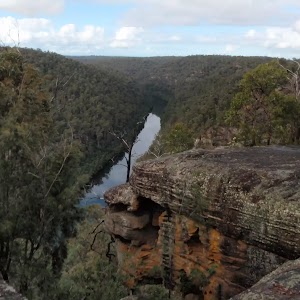
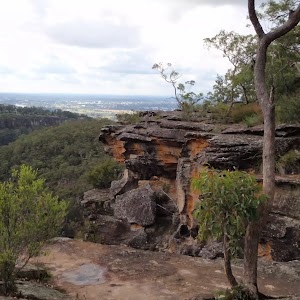
Pisgah Rock, is a short walk from Nepean Lookout Fire Trail in the lower Blue Mountains, and provides excellent views up Erskine Creek Gorge. The informal lookout is not fenced, and the surface is uneven with large crevasse like cracks. The view is simply amazing, with great views right up the middle of Erskine Creek Gorge. There are also great views to the left, down Erskine Creek Gorge and across the flats of the southern parts for greater Sydney. The rock presumably derives its name from the height point on Mount Nebo, where the Bible reports Moses seeing the promised land for the first time. In Hebrew pisgah refers to a high place. This Pisgah Rock is very much a high place, with great views.
(0.78 km)
Pisgah Rock
to
Junction of Erskine and Lincoln Crks Route: Unmanaged - bushtrack
Length = 605 m
Time = 21 mins
Climb = 18 m
Descent = -200 m
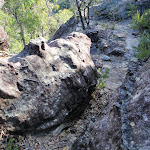
Turn right: From the 'take care when walking near cliffs' signpost on Pisgah Rock this walk now follows the rock at the top of the cliff keeping the valley below to the left. After passing a couple of very steep looking cracks in the rock, the faint track comes to a much more gentle looking pass with a large Banksia growing out of it. The walk heads down through this pass. The track turns right and heads down a much steeper climb through the V in the rock. At the bottom of this climb the bush track leads to a small unfenced rock platform. The walk then turns right heading down the couple more climbs then turns left back under the rock platform. The track continues to wind down several more steep rocky climbs following a faint track and cairns. after most climbs the track generally tends left and down hill. After the last climb, the track heads away from the cliff making, tending left heading fairly steeply to an intersection near the junction of Erskine Creek and Lincoln Creek.
Junction of Erskine and Lincoln Creeks
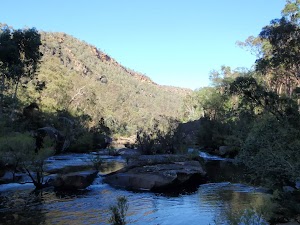
Alt = 71 m
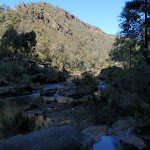
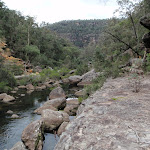
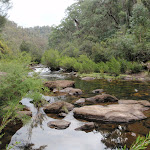
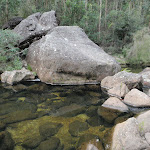
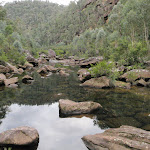
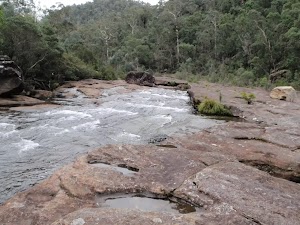
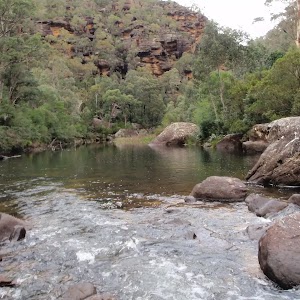
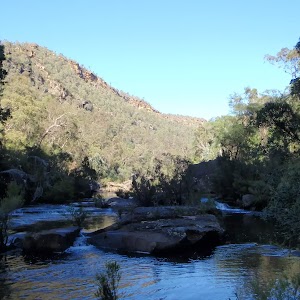
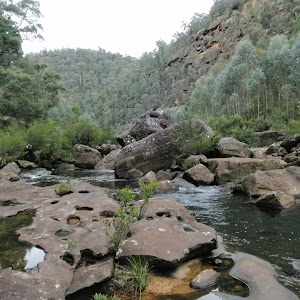
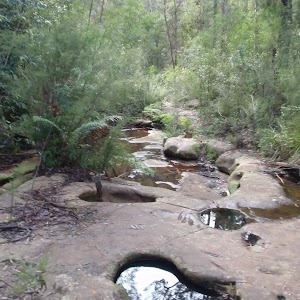
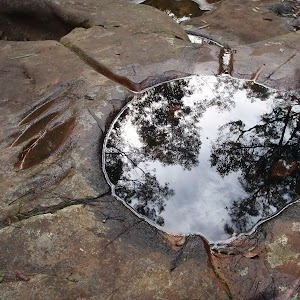
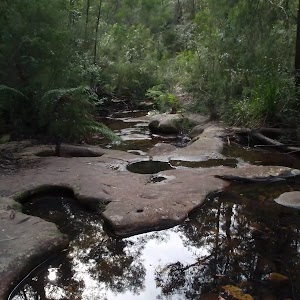
The junction of Erskine and Lincoln Creeks, in the Blue Mountains National park, occurs at a large rock platform. The rock platform contains many water holes, a few large square boulders and a few short cascades. There are breath taking views up looking Erskine Creek Gorge. Looking up to the escarpment, to the north east, there is a view of Pisgah Rock. This area floods after rain, but when water levels are normal, this can be a lovely place to rest and enjoy the creeks and gorge.
(1.38 km)
Junction of Erskine and Lincoln Creeks
to
Lower Lincoln Campsite Route: Hard - bushtrack
Length = 74 m
Time = 2 mins
Climb = 3 m
Descent = -4 m
Turn right: From the intersection, this walk cross Lincoln Creek at the rock pools staying upstream of the small cascade (this may be impassable after rain). On the other side of the creek the walk picks up a faint track heading gently up the ridge. Soon the track opens up into a large campsite with some wonderful grass trees.
Lower Lincoln Campsite
Alt = 71 m
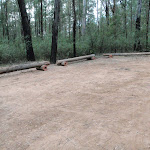
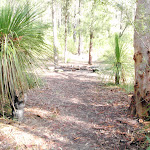
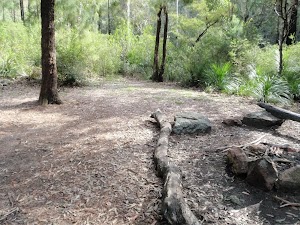
This well established campsite is found about 60m up the spur, south west of the junction of Lincoln and Erskine Creek. The large campsite has enough room for 6-10 tents and has an established campfire with log seats. The campsite is set among some lovely eucalypt and grass trees. Water from both creeks should be treated before drinking. If this campsite is full, there are a few alternative smaller sites in the area, one further up the hill, and another down by Erskine Creek.
(1.46 km)
Lower Lincoln Campsite
to
Dadder Cave Route: Unmanaged - undefined
Length = 1.54 km
Time = 32 mins
Climb = 67 m
Descent = -40 m
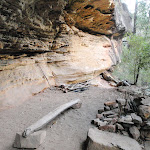
Turn left: From the eastern side of the campsite this walk follows the narrow track towards Erskine Creek. Just before the creek the track turns right and heads up stream. The track soon fades and becomes undefined, this walk continues along the flood bank to find a good spot to cross to the other side of Erskine Creek. There are a few cossing options before coming to the land slide, feet will most likely get wet (the creek may be impassable after rain). When crossing notice the rounded hill upstream, Dadder cave is about 1km before it. One on the eastern bank the walk continues upstream heading towards the rounded hill with Erskine creek now to the right. The walk passes several smaller caves and as the walk gets closer to Dadder Cave a fairly well defined track forms leading up behind a large boulder and into the cave. The cave is just upstream from, and on the opposite side of the gorge, from a gully entering Erskine Creek from the west. The cave has clearly been used for camping for some time, with a campfire, and left over camping material.
Dadder Cave
Alt = 99 m
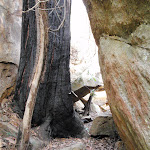
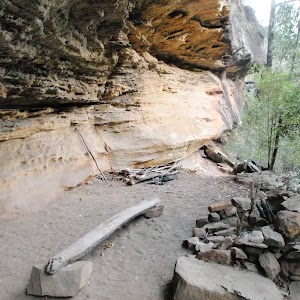
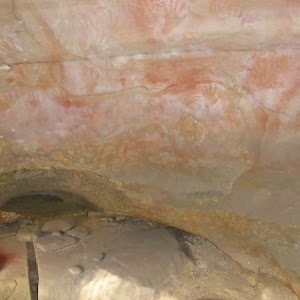
Dadder cave, is a large sandstone cave, that has been used as a camping cave by bushwalkers for several decades. The cave is on the easter side of Erskine Creek, about 1.5km upstream from the junction with Lincoln Creek. The large cave is about 30m up the bank and fairly well protected from the weather. There is enough room to sleep about 6 people, more if people are comfortable with each other, and happy to spread along the full length of the cave. A large stone fire place, a bench seat, and a few other items have been left by previous walkers. A log book that makes interesting reading is found under a tarp at the high end of the cave. The cave make a great base camp, for walkers planning to spend some time enjoying Erskine Creek. The name 'Dadder' is believed to come from Death Adder, abbreviated to D'adder, and then finally to Dadder. Erskine Creek provides plenty of water, treat the water before drinking.
(3 km)
Dadder Cave
to
Junction of Erskine and Lincoln Creeks Route: Unmanaged - undefined,bushtrack
Length = 1.61 km
Time = 34 mins
Climb = 44 m
Descent = -70 m
Turn around: From Dadder cave this walk heads out the high end of the cave picking up, and following a track from the gum tree. The creek can be heard below and to the left, as the track heads around the large boulder on the uphill side. The track soon fades to a foot pad, and is not visible at times, but the walk continues following the creek downstream. The clearest route often takes the walker higher up the bank and across rock platforms and around boulders. The creek is not always clearly visible. The walk keeps the creek on the left until finding a good place to cross after passing the land slide on the oppersite bank (this creek may be impassable after rain). Once on the western bank the walk follows the flood bank, through the dense scrub. Before to long a faint track appears and becomes clearer as it leads down stream. About 50m before the junction with Lincoln Creek, the track turns left up away from the creek. Following this track left, leads up short hill to a large open campsite. Turn right: From the campsite, this walk takes the track from the lowest point in the campsite near the grass tress and heads down the hill. The track soon open up onto the rock pools on Lincoln Creek a few meters above Erskine Creek. The walk crosses Lincoln Creek upstream of the small cascade to find a track on the opperite bank near the large boulder (this may be impassable after rain).
(4.61 km)
Junction of Erskine and Lincoln Creeks
to
Rock platform Route: Hard - undefined
Length = 261 m
Time = 7 mins
Climb = 22 m
Descent = -13 m
Veer right: From the intersection, this walk head downstream along Erskine Creek, keeping the creek to the right. After following the indistinct bush track for a short while it leads to an large open rock platform. The walk continues along the rock until coming to the edge of a large pool at the bottom of the cascades.
Rock Platform
Alt = 82 m
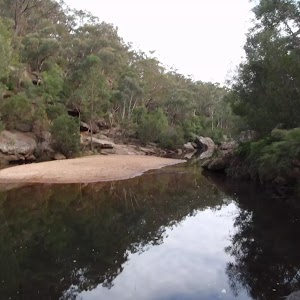
This is a rock platform on Erskine creek about 200m downstream from the junction with Lincoln Creek. The area does flood so depending on water levels this is usually a large rock platform with some interesting water holes, and a lovely cascade flowing into a shallow pool. Although this lacks the majestic view up Erskine Creek (found a short distance upstream), this spot does provide an open spot, great for a snack, lunch and to rest.
(4.87 km)
Rock platform
to
Lower Erskine Campsite Route: Unmanaged - undefined
Length = 2.27 km
Time = 51 mins
Climb = 98 m
Descent = -141 m
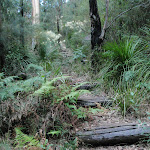
Veer left: From the end of the rock platform, the walk heads downstream initially by following the rock fall on the northern bank. There is a faint foot pad that lasts a short while. Find a good place to cross to the other bank (may be impassable after rain), where a rock shelf on the southern bank make walking easier. After passing the large gully the foot pad has all but disappeared, the walk continues down stream keeping the creek on the left. About half way along the large cliff high on the other side of the creek, the bank on the western side becomes difficult to pass due to another cliff. From here find a good place to cross (may be impassable after rain) and pick up the faint foot pad on the other side. The foot pad continues downstream (now with the creek on the right) and passes a few rock platforms at times. The track becomes more distinct as it gets closer to Jack Evans track. Not far before Jack Evans track the footpad comes to a small campsite with a fire circle on the left.
Lower Erskine Campsite
Alt = 39 m
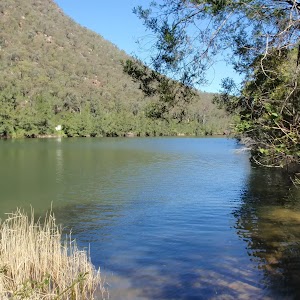
A small campsite, just up from the eastern bank of Erskine Creek, a short distance north of where Jack Evans track crosses the creek. The campsite has a small fire circle, and enough space for one maybe two tents. Erskine creek is a handy water supply (treat before drinking).
(7.14 km)
Lower Erskine Campsite
to
Int of Jack Evans Track and Erskine Creek Route: Hard - bushtrack
Length = 106 m
Time = 2 mins
Climb = 4 m
Descent = -2 m
Continue straight: From the campsite this walk heads down stream keeping the creek to the right. Following a faint bush track the walk soon comes to an intersection with the Jack Evans Track just above a small sandy beach.
(7.25 km)
Int of Jack Evans Track and Erskine Creek
to
Int of Jack Evans and the lower Erskine tracks Route: Hard - bushtrack
Length = 101 m
Time = 2 mins
Climb = 6 m
Descent = -5 m
Turn left: From the intersection just above sandy beach on the creek, this walk follows the clear bush track away from the creek and up the gentle hill. The track soon turns right and follows the creek on the right, downstream for a little while. The track then tends left up hill passing through a tunnel of vegetation to emerge onto an intersection with the more distinct Jack Evans and lower Erskine tracks
(7.35 km)
Int of Jack Evans and the lower Erskine tracks
to
Eastern side of natural dam wall Optional sidetrip: Route: Hard - bushtrack,undefined
Length = 182 m
Time = 7 mins
Climb = 30 m
Descent = -17 m
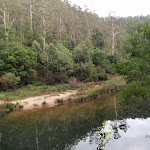
Turn right: From the intersection, this walk follows the wider bush track down hill keeping the sound of Erskine Creek to the right, soon the creek is in view. The track soon fades to a become a less distinct bush track leading up the bank away from the creek. The track climbs to a large boulder providing great views of the pool in Erskine Creek. The track then leads down to the natural charcoal deposits and continues along the creek edge to the water depth indicators. (A remote monitoring box is visible up the hill). Veer left: From the water depth indicators this walk follows the creek down stream keeping Erskine Creek on the right. The faint bush track soon leads to the visible series of large boulders forming a natural dam wall. (Retrace your steps back to the main track, then veer right to continue along this walk.)
Natural dam pool
Alt = 55 m
A series of very large boulders have formed a natural dam on Erskine Creek, about 170m north of Big Crater Creek. The dam forms a large lovely pool upstream. The pool is used by Sydney Water for measurements, and a water depth indicator is bolted to the rock. The pools is not safe to dive or jump into, there are many submerged objects.
(7.35 km)
Int of Jack Evans and the lower Erskine tracks
to
Erskine Lookout Track: Hard - bushtrack
Length = 851 m
Time = 31 mins
Climb = 172 m
Descent = -28 m
Veer left: From the intersection this walk follows the wider bush track up the hill past the large gum tree. The track then comes to, and climbs a series of timber steps up to a distinct saddle. The track continues gently up the hill for a short distance to come to an intersection with the faint short cut track off to the right. Continue straight: From the intersection this walk follows the wider bush track up the gentle hill. The track is narrow in places with a drop off to the right. The track then starts to climb the hill using a series of steps and switch backs to wind up through the wonderful sandstone outcrops. The track passes a few nice caves and through gaps in the rock. After the last steep section the track comes to a large rock platform on the left (with some great views). The track continues to follow the main path up the hill, and passes a long sandstone wall on the left of the track. Soon after this sandstone wall, the track comes to a wide sandy patch, with and unfenced rock platform and view on the left. This is the Erskine Lookout, an informal unfenced lookout.
Erskine Lookout
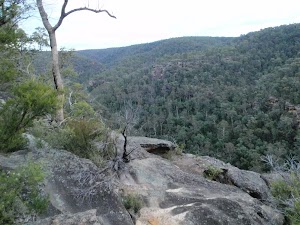
Alt = 184 m
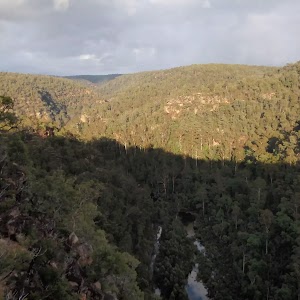
This informal and unfenced lookout on Jack Evans Track is in the lower Blue Mountains south west from the end of Nepean Lookout Fire Trail. The lookout is perched high above Erskine Creek and provides wonderful view upstream, and good views downstream. The view down in to the gorge gives a unique perspective of the lower section of Erskine Creek.
(8.2 km)
Erskine Lookout
to
End of Nepean Lookout Fire Trail Track: Moderate - bushtrack
Length = 324 m
Time = 8 mins
Climb = 29 m
Descent = -1 m
Continue straight: From Erskine Lookout, this walk heads up the gentle hill, following the sandy track, keeping the view to the left. The track passes some informal tracks to the left, passes a burnt 'take care when walking near cliffs' sign, and continues up the hill getting a little steeper. The track then comes to a silver information sign about 'Jack Evans Track'. The track then bends left and comes to the car park at the end of the publicly accessible section of the Nepean Lookout Fire Trail.
(8.52 km)
Car park at end of Nepean Lookout fire trail
to
Pisgah Rock track head Walk: Easy - road
Length = 1.81 km
Time = 33 mins
Climb = 51 m
Descent = -9 m
Turn left: From the end of end of Nepean Lookout fire trail, this walk follows the road northward away from the locked gate initially keeping the car park to the left. The road soon comes to an intersection with Pisgah Ridge fire trail (a gated management trail on the right). Veer left: From the intersection, this walk follows Nepean Lookout fire trail north west around the left hand bend. The road soon comes to the Machins Crater car park. Continue straight: From the Machins Crater car park, this walk follows Nepean Lookout fire trail north west, up the hill, initially with Machins Crater track on the left. The road heads up the hill and soon comes the Pisgah Rock track head and car park.
Drive from Pisgah Rock track head
A park entry fee is required for driving into the park. You can drive or ride from the end of this walk Use these links to plan your trip from the end of this walk. Plan your trip to --> Sorry there are no driving directions, but you can see the end of this walk on this map
Plan your trip to the start of the walk and back from the end of the walk
Public Transport links currently not working, sorry
Driving Directions
To the start of the walk
Since this walk starts on a low grade road
Google can't give you a route plan to the start.
View the location on a road map here --> See the start of the walk on a map
From the end of the walk
Since this walk ends on a low grade road
Google can't give you a route plan from the end.
View the location on a road map here --> See the end of the walk on a map
Fire Danger This walk passes Greater Sydney Region fire area which currently has a NONE rating and No Ban in place. (Downloaded 58 minutes ago) Please Note: Each park may have its own fire ban status, this rating is based on information from the RFS and BOM.
Blue Mountains National ParkLink to official closures and fire bans page Attracting over 3 million visitors annually, Blue Mountains National Park holds some of Australia's most spectacular and diverse wilderness areas. Explore the Grose Valley, with its sheer sandstone cliffs, waterfalls and scenic walking, or enjoy the famous views of the Three Sisters. Easy access makes a day trips very worthwhile, but with such diversity it would be great to stay in one of the many B&B's and spend a few days soaking up the region. Region: Sydney & Surrounds Park feesCampingFacilities Current Park Closure information for Blue Mountains National Park Closure information last downloaded Thursday 20th of June 2013 09:00 AM CLOSED AREAS ATTENTION Katoomba Walking Tracks The following walking tracks in the Katoomba area will be closed on Thursday 20thJune 2013 due to helicopter lifting in materials for the repair of the Prince Henry Cliff Walk between Cliff View Lookout and Lady Darley’s Lookout:
Federal Pass (from Katoomba Falls [Cook’s Crossing] to intersection with Dardanelles Pass below the Three Sisters.
Federal Pass from Golden Stairs intersection, below Narrow Neck, to the Scenic Railway bottom station.
Prince Henry Cliff Walk between Cliff View Lookout and Lady Darley’s Lookout
Glenraphael Drive at Narrow Neck will also be closed at the national park boundary – 1.5km from Cliff Drive. There will be no access to Narrow Neck for vehicles or pedestrians. Access to and from Scenic World will be open via Furber Steps. ATTENTION Wentworth Falls Tracks
The following tracks will be closed on Friday 21st June due to helicopter lifting materials to the Den Fenella Walking Track for track upgrade work. National Pass Wentworth Pass Vera Falls Undercliff track Den Fenella track Rocket Point
Wentworth Falls Picnic Area, lookouts and the following tracks will remain OPEN:
Valley of the Waters to National Pass junction
Nature Track
Short Cut Track
Princes Rock Lookout
Princes Rock track (Undercliff Track to Wentworth Falls).
Queens Cascade
Fletchers Lookout
Wentworth Falls to Rocket Point Junction Claustral Canyon access change
Access to Claustral Canyon via the usual route across private land at Mount Tomah is no longer possible due to landholders denying access. NPWS has sought alternative access through private land without success. Canyoners should respect the rights of Mount Tomah residents and avoid using private land.
Alternative access and parking from the west side of Mt Bell has been approved. For details please contact the NPWS Heritage Centre, phone 02 4787 8877; open seven days 9.00 am to 4.30 pm. Ingar camping areas - Ingar campground
Vehicle access along Ingar Road may be closed at the end of Queen Elizabeth Drive while private property development works are underway. NPWS requests that visitors respect private property closures.
When the gate is closed Ingar Camping Area will remain open to walkers who access around the private property. Walking distance approximately 13kms. Murphys Glen camping area closed - Murphys Glen campground
Murphys Glen is closed due to road damage and facilities maintenance. Wentworth Falls walking tracks
The Undercliff and Overcliff tracks are closed between Princes Rock access and Lyrebird Lookout due to recent landslides. This means visitors doing the National or Wentworth Pass loops will need to return via the Shortcut Track. The Den Fenella walking track will be closed 7 days per week during upgrade work which commenced 31 January 2013. The Den Fenella lookout remains closed due to structural damage on the bridge. All enquiries to the Blue Mountains Heritage Centre on 02 4787 8877.
Locations affected:Overcliff-Undercliff track, Den Fenella walking track
Did this one over the weekend - a great walk with a quiet campsite and some great swimming holes.
The trip down from Pisgah rock required dropping packs to each other in a couple of sections but is generally pretty clear.
The trip down from the Lincoln ck campsite to the start of Jack Evans track is quite variable with some scrub bashing required. We had a pretty warm weekend so there were quite a few red-bellied black snakes around but it also meant we appreciated the swim (the water is very cool).
We did this track last weekend. We are 4 fairly experienced walkers, with at least 5 overnighters in the last year or so, and we really struggled with this walk. We think maybe the heavy rains and flooding of recent months have changed the terrain dramatically, with the track being difficult to nearly impossible most of the way. The walk down from Pisgah, as described by the previous walker , required dropping packs on at least three occasions, but this was a clear and defined walk. Estimated times were way out, 30 mins to Dadder cave from eskine creek junction took us 90 mins of clambouring, slipping ,climbing and crawling. On the return, the "walk" from eskine creek juntion to Jack Evans track which was estimated at 90 mins took us over 3 hours. We may have missed the track in places, but instructions were vague and landmarks not visible. This section of the track made the rest feel easy! The track is gone, through deadfall and flood damage, and i strongly recommend caution and plenty of time for anyone attempting this walk. The cave was great, with interesting reading in the log book, but the difficulty of getting in and out spoiled the weekend for us. More like combat training than bushwalking. :(
Hi Sue, thanks for the feedback - sorry you had such a hard time.
I will review the intra-walk times, they are sometime are to short on harder tracks.
This is an off track walk - so I am not surprised you could not find the track. Perhaps I need to make this much clearer, the Black Diamond grading, and the "Route: Hard - undefined" refers to off track walks.
I am working on a new system to explain each walks grade. I am still testing it but I will try to release it soon. I think I have your e-mail Sue, I will drop you a message there.
Thanks
Matt :)
Just to confirm: It took me yesterday 2h10min along Erskine Creek because of bush bashing. Not very thick scrub but a lot of dead wood.
Also, I must have taken a wrong turn down Pisgah Rock as the track I took ended up a bit downstream in Monkey Ropes Creek. There it was marked with yellow and red ribbons, leading back to Lincoln Creek. Again, it took a bit longer, about 1h-1h20min (incl. break).
But great swimming, great views, good walk!